Petra
The lost rose-red city carved directly into the sheer sandstone canyons of the Nabataean desert.
Geographic Essence & What Makes It Unique
Carved by the nomadic Nabataean civilization over two millennia ago at the crossroads of Arabian incense and spice routes, Petra stands as one of humanity's greatest archaeological wonders. Approached through the Siq—a 1.2-kilometer winding slot canyon with soaring rock walls that suddenly part to reveal the classical facade of the Treasury—the ancient city expands across 260 square kilometers of rugged canyons, royal tombs, and hydraulic ingenuity.
Concrete Landmarks & Terrains to Explore
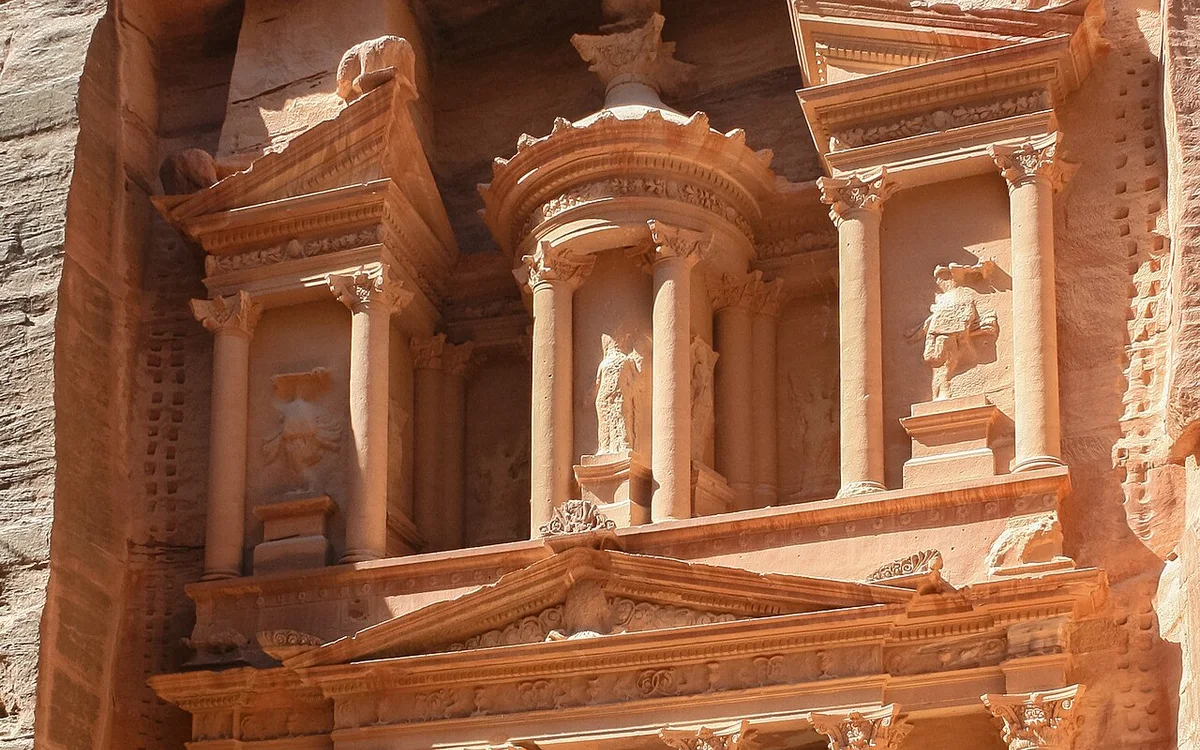
Al-Khazneh (The Treasury)
The world-famous 40-meter-high Hellenistic facade carved into sandstone, glowing rose-pink in the morning light.
Ad-Deir (The Monastery)
A colossal rock-hewn temple measuring 50 meters wide, tucked into a secluded mountain plateau overlooking the Arava valley.
The Royal Tombs
Monumental burial facades etched along the cliff of the King's Wall showing spectacular rainbow sandstone erosion banding.
The Siq
Narrow tectonic chasm flanked by 80-meter-high cliffs retaining ancient terracotta water channels along its floor.
Core Exploration Experiences
- Walk through the dramatic natural shadows of the Siq canyon at the crack of dawn.
- Climb the 850 rock-cut steps up the mountain pass to gaze upon the monumental Monastery (Ad-Deir).
- Hike the High Place of Sacrifice trail for commanding panoramas across the entire biblical landscape.
- Explore the lesser-visited back trail entering through Little Petra (Siq al-Barid).
Seasonality & Optimal Travel Months
March to May and September to November provide ideal, comfortable hiking temperatures. Midsummer is searingly hot, while winter brings cold desert nights and flash flood risks.
Balanced Editorial Assessment
Key Advantages
- Unequaled sense of archaeological wonder and architectural mastery integrated with nature.
- Expansive backcountry trails that quickly escape the main tourist thoroughfares.
- Warm and welcoming Bedouin hospitality with herbal tea stalls throughout the site.
Drawbacks & Real Challenges
- Substantial walking distances over rocky, uneven terrain requiring strong physical stamina.
- Persistent offers from local touts for camel, donkey, and horse carriage rides.
- Dangerous flash flood events can occur during autumn or winter rainstorms, prompting park closures.
Field Notes & Planning Intelligence
- Purchase the Jordan Pass online before arrival to combine tourist visa waiver and multi-day Petra entry.
- Enter the site right at 6:00 AM when gates open to witness the Treasury in serene morning tranquility.
- Wear sturdy, broken-in hiking boots with good grip for sandy sandstone surfaces and staircases.
Comparable Geographic Alternatives
Verified Research Sources
This profile was verified using records from primary government, conservation, and meteorological bodies.
- Petra Development and Tourism Region Authority (PDTRA) — Archaeological park opening regulations, trail maps, and official guide rosters.
- UNESCO World Heritage Centre — Criteria (i, iii, iv) detailing Nabataean water conduit networks and rock-cut necropolises.
- Jordan Meteorological Department (JMD) — Wadi Musa desert climate averages and autumn flash-flood warning patterns.