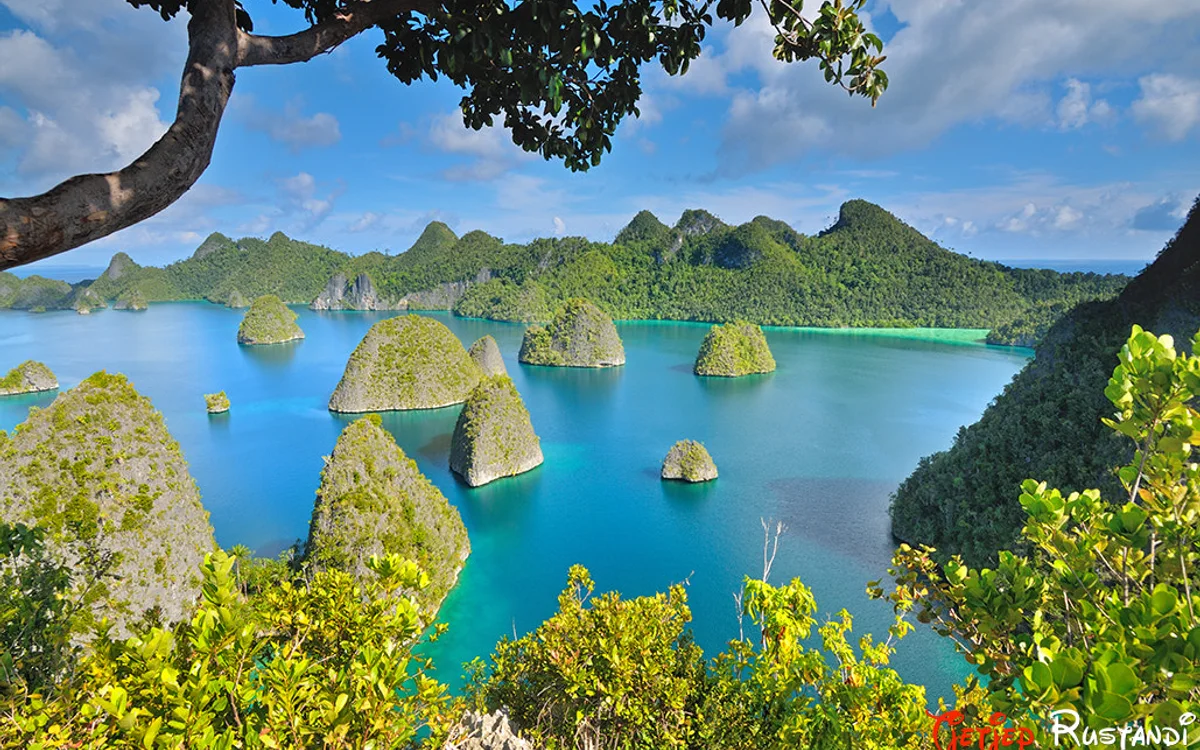
Raja Ampat
The undisputed epicenter of global marine biodiversity among emerald limestone karst archipelagos.
Geographic Essence & What Makes It Unique
Positioned in the heart of the Coral Triangle, the "Four Kings" archipelago is home to the most diverse marine ecosystem on planet Earth, sheltering over 1,500 species of reef fish and 550 species of hard corals—roughly 75% of the global total. Above water, hundreds of mushroom-shaped jungle-topped limestone islets jut out of luminous turquoise lagoons, where birds of paradise dance in canopy foliage and manta rays glide across coral cleaning stations.
Concrete Landmarks & Terrains to Explore
Wayag Archipelagic Reserve
Dramatic northern cluster of razor-sharp limestone karst towers rising from crystalline turquoise waters.
Piaynemo (Fam Islands)
Accessible karst viewpoint providing breathtaking vistas across emerald islets with comfortable wooden boardwalk stairways.
Cape Kri & Dampier Strait
High-current underwater channel bursting with swirling schools of barracudas, reef sharks, and pristine soft coral gardens.
Misool Southern Atolls
Wild southern sector renowned for sheer underwater caverns, ancient cliff rock art, and protected shark nurseries.
Core Exploration Experiences
- Snorkel or scuba dive the legendary currents of Cape Kri, where scientists recorded a world-record 374 fish species in a single dive.
- Ascend the wooden stairs of Wayag or Piaynemo for the quintessential panorama of mushroom islets and emerald bays.
- Witness pelagic oceanic manta rays feeding and being cleaned at Manta Sandy and Blue Magic.
- Embark on an early dawn jungle hike on Gam Island to observe the display mating dance of the Red Bird of Paradise.
Seasonality & Optimal Travel Months
October through April offers calm seas, exceptional underwater visibility, and minimal rain. June through August brings strong winds and rough open ocean crossings.
Balanced Editorial Assessment
Key Advantages
- The highest recorded marine biodiversity and richest coral cover anywhere on Earth.
- Extremely low tourist density with pristine coral gardens free of mass tourism impact.
- Direct economic support to local Papuan community homestays and marine sanctuary patrols.
Drawbacks & Real Challenges
- Remote and demanding access requiring multiple flights via Jakarta/Makassar to Sorong followed by sea ferries.
- Underwater currents can be very swift; diving requires experience and careful drift-dive awareness.
- Limited medical facilities and telecom coverage across remote outer islands.
Field Notes & Planning Intelligence
- Purchase travel and dive insurance covering high-altitude emergency aeromedical evacuation.
- Pay the official Marine Protected Area (PIN) entry fee before boarding boats in Sorong.
- Carry sufficient Indonesian Rupiah cash as ATMs do not exist on the outer islands.
Comparable Geographic Alternatives
Verified Research Sources
This profile was verified using records from primary government, conservation, and meteorological bodies.
- Raja Ampat Marine Park Authority (BLUD UPTD) — Marine Protected Area environmental entry tariffs, zoning laws, and manta ray codes of conduct.
- Conservation International Indonesia — Scientific biodiversity monitoring documenting 75% of world coral species in Bird's Head Seascape.
- Indonesian Meteorology, Climatology, and Geophysical Agency (BMKG) — Equatorial maritime winds, wave heights, and southern monsoon swell calendars.