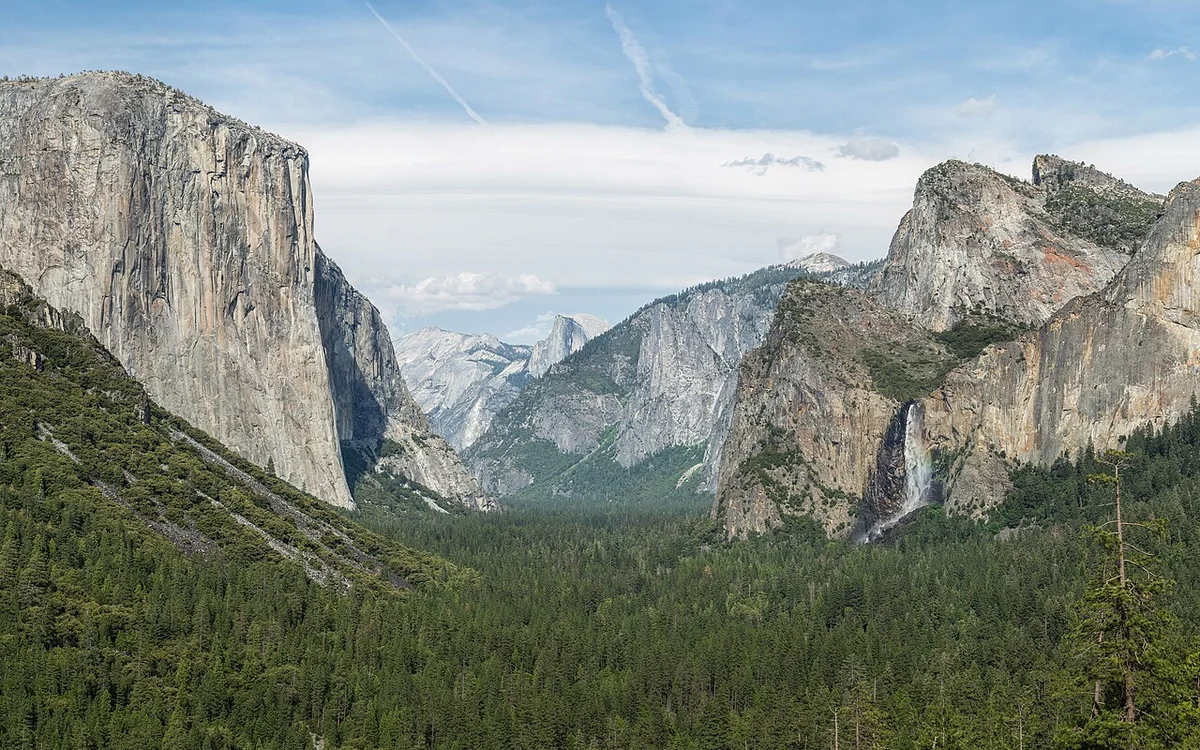
Yosemite National Park
Monumental granite monoliths, soaring waterfalls, and ancient giant sequoia groves.
Geographic Essence & What Makes It Unique
First protected in 1864 when Abraham Lincoln signed the Yosemite Grant, this Sierra Nevada sanctuary represents the foundation of the modern national park concept. Carved by ancient glaciers through colossal granite batholiths, Yosemite Valley presents an ensemble of vertical geological wonders found nowhere else: the sheer 900-meter wall of El Capitan, the iconic cleaved summit of Half Dome, and Yosemite Falls plunging 739 meters down sheer cliffs.
Concrete Landmarks & Terrains to Explore
El Capitan
The undisputed mecca of big-wall rock climbing, rising 914 meters vertically above the valley floor.
Half Dome
Iconic granite crest rising nearly 1,500 meters above the valley floor, ascended via a famous steel cable route.
Yosemite Falls
One of North America's highest waterfalls, cascading 739 meters in three dramatic tiers.
Glacier Point
High cliff overlook offering dizzying birds-eye views directly down into Yosemite Valley and the High Sierra peaks.
Core Exploration Experiences
- Gaze across the iconic Tunnel View at sunrise as golden light illuminates El Capitan, Half Dome, and Bridalveil Fall.
- Hike the Mist Trail ascending granite stairs alongside roaring Vernal and Nevada Falls.
- Drive the high-elevation Tioga Road across alpine meadows and granite domes to Tenaya Lake and Tuolumne Meadows.
- Walk in reverence beneath thousands-of-years-old giant sequoias in the Mariposa Grove.
Seasonality & Optimal Travel Months
May and June offer roaring waterfalls powered by snowmelt. September and October provide crisp fall days and open high-elevation passes with fewer crowds. Winter offers peaceful, snow-blanketed valley scenes.
Balanced Editorial Assessment
Key Advantages
- Unmatched concentration of iconic geological monoliths and monumental waterfalls.
- Extensive trail system ranging from gentle valley strolls to strenuous alpine summit ascents.
- Free, efficient hybrid shuttle bus system circulating throughout Yosemite Valley.
Drawbacks & Real Challenges
- Strict peak-hours driving reservations are required during busy summer and weekend periods.
- Waterfalls diminish substantially or dry up completely by late August and September.
- Tioga Pass and Glacier Point roads are closed due to deep snow from November through late May/June.
Field Notes & Planning Intelligence
- Check Recreation.gov months in advance to secure peak-hour driving permits and campground reservations.
- Apply for the Half Dome preseason cable permit lottery in March if you intend to hike to the summit.
- Visit during late spring (May to early June) to experience peak waterfall volume.
Comparable Geographic Alternatives
Verified Research Sources
This profile was verified using records from primary government, conservation, and meteorological bodies.
- National Park Service (NPS) — Timed vehicle entry reservation policies, wilderness backpacking permits, and Half Dome lottery system.
- UNESCO World Heritage Centre — Criteria (vii, viii) documenting monumental granite plutons and glacial erosion.
- National Oceanic and Atmospheric Administration (NOAA) — Sierra Nevada snowpack data and seasonal Tioga Pass opening/closure dates.